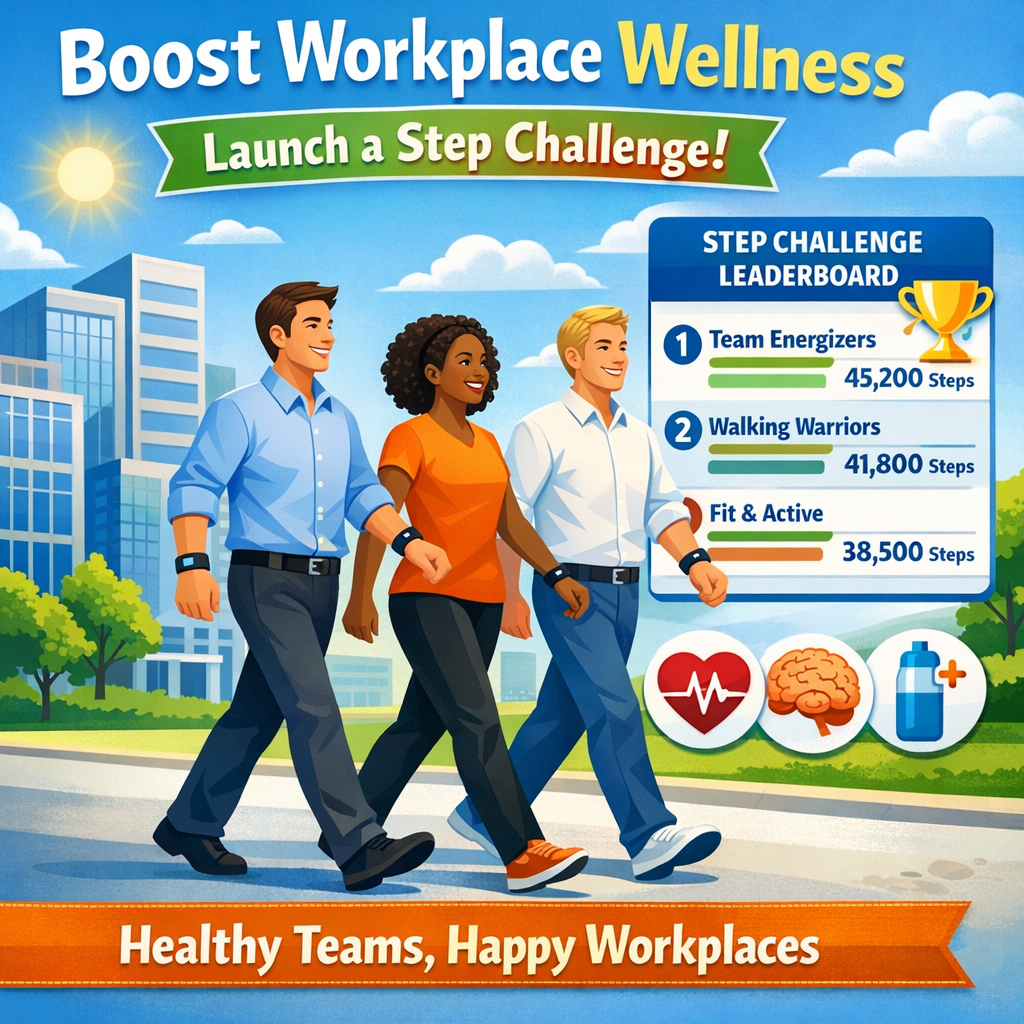
Why Workplace Step Challenges Are Becoming One of the Most Effective Employee Wellness Programs
Employee wellness has shifted from a nice-to-have perk to a business priority. Organizations are investing more in initiatives that improve employee well-being, strengthen workplace culture, and support long-term productivity.
The challenge is that many wellness programs struggle to gain traction.
Gym reimbursement programs often go unused. Fitness initiatives can feel intimidating to employees who are just getting started. Some programs create excitement for a week or two before participation drops off entirely.
The issue usually isn't that employees don't care about wellness. The issue is that many programs ask for too much change all at once.
Workplace step challenges take a different approach. Instead of requiring employees to completely change their routines, they build around something people already do every day: walking.
That simplicity is one of the reasons step challenges have become one of the fastest-growing workplace wellness activities.
Why Walking Challenges Work
Walking is one of the most accessible forms of physical activity available.
Employees do not need a gym membership, specialized equipment, or advanced fitness knowledge to participate. Whether someone is highly active or just beginning to improve their health, everyone starts on relatively equal ground.
Step challenges also fit naturally into daily routines.
Employees can participate by:
- Taking walking meetings
- Walking during lunch breaks
- Parking farther away
- Going for evening walks
- Staying active while working remotely
- Walking with family or friends outside work
This flexibility removes many of the barriers that cause traditional wellness programs to struggle.
For hybrid and remote workplaces, walking challenges can also create something many organizations miss: shared experiences.
Even when employees work in different cities or countries, participating in a common challenge creates a sense of connection and friendly competition.
Benefits for Employees
Better physical health
Regular movement has been associated with numerous health benefits, including improved cardiovascular health, increased energy levels, and reduced risk factors associated with sedentary lifestyles.
Employees do not need intense workouts to experience benefits. Small increases in daily movement can create meaningful changes over time.
Reduced stress and improved mental well-being
Walking can help employees mentally reset during the workday.
Short breaks away from screens often improve mood, reduce stress levels, and help people return to work feeling more focused.
Increased motivation through visible progress
People are more likely to stay consistent when progress is measurable.
Watching steps accumulate, reaching goals, and participating in challenges creates a sense of momentum that often carries into other healthy habits.
Benefits for Employers
Stronger employee engagement
Wellness initiatives work best when employees actually participate.
Because walking is approachable, organizations often see broader participation across departments and fitness levels.
Better workplace culture
Shared goals can strengthen relationships between coworkers.
Friendly competition, team challenges, and progress updates give employees opportunities to interact outside of normal work responsibilities.
Lower long-term wellness costs
Preventative wellness efforts may contribute to reduced healthcare costs and fewer wellness-related challenges over time.
Organizations increasingly recognize that encouraging healthier habits today can create benefits well into the future.
Why Workplace Wellness Programs Often Fail
Not every challenge succeeds.
Many programs start with excitement and lose momentum quickly because of a few common mistakes.
Goals are too aggressive
A daily target that feels impossible can discourage participation.
Employees should feel challenged, not overwhelmed.
Only top performers get attention
If rewards go only to the employees with the highest step counts, many participants mentally check out early.
Goal-based systems and team challenges often keep more people involved.
Challenges run too long
A three-month challenge can feel exhausting.
Shorter events such as one- or two-week challenges often create stronger engagement and excitement.
Progress is not visible
People stay motivated when they can see movement.
Regular updates, leaderboards, milestones, and team standings help maintain momentum.
Tips for Running a Successful Workplace Step Challenge
Create excitement before launch
Introduce the challenge before it begins.
Use company announcements, email updates, team meetings, or internal communication channels to explain goals and build anticipation.
Make participation easy
The easier it is to join, the more employees will participate.
Reduce setup steps and avoid unnecessary complexity.
Focus on consistency rather than intensity
Not everyone is training for a marathon.
Rewarding goal days, streaks, and participation often keeps engagement higher than rewarding only the highest totals.
Encourage social interaction
Healthy competition works best when people feel connected.
Celebrate milestones, highlight achievements, and encourage team interaction throughout the challenge.
How StepClash Helps Teams Launch Challenges Without the Complexity
Managing a workplace challenge manually can quickly become difficult.
Tracking participation, updating leaderboards, and keeping employees engaged takes time.
StepClash helps simplify the process by giving organizations tools to:
- Launch challenges quickly
- Track step progress automatically
- Create friendly competition
- View leaderboards and milestones
- Keep teams engaged throughout the event
The goal is not to create another complicated wellness initiative.
The goal is to make movement easy, visible, and enjoyable.
Walking Challenges Are More Than Just Steps
The biggest benefit of workplace challenges often goes beyond the step count itself.
Small actions create momentum.
Employees who begin walking more often may start paying more attention to hydration, sleep, movement habits, and overall well-being.
Healthy workplace cultures are rarely built through one large initiative.
They are usually built through small actions repeated consistently.
Sometimes it starts with something as simple as taking a few extra steps.
Comments
Join the conversation on this article.
Log in to comment.
Login