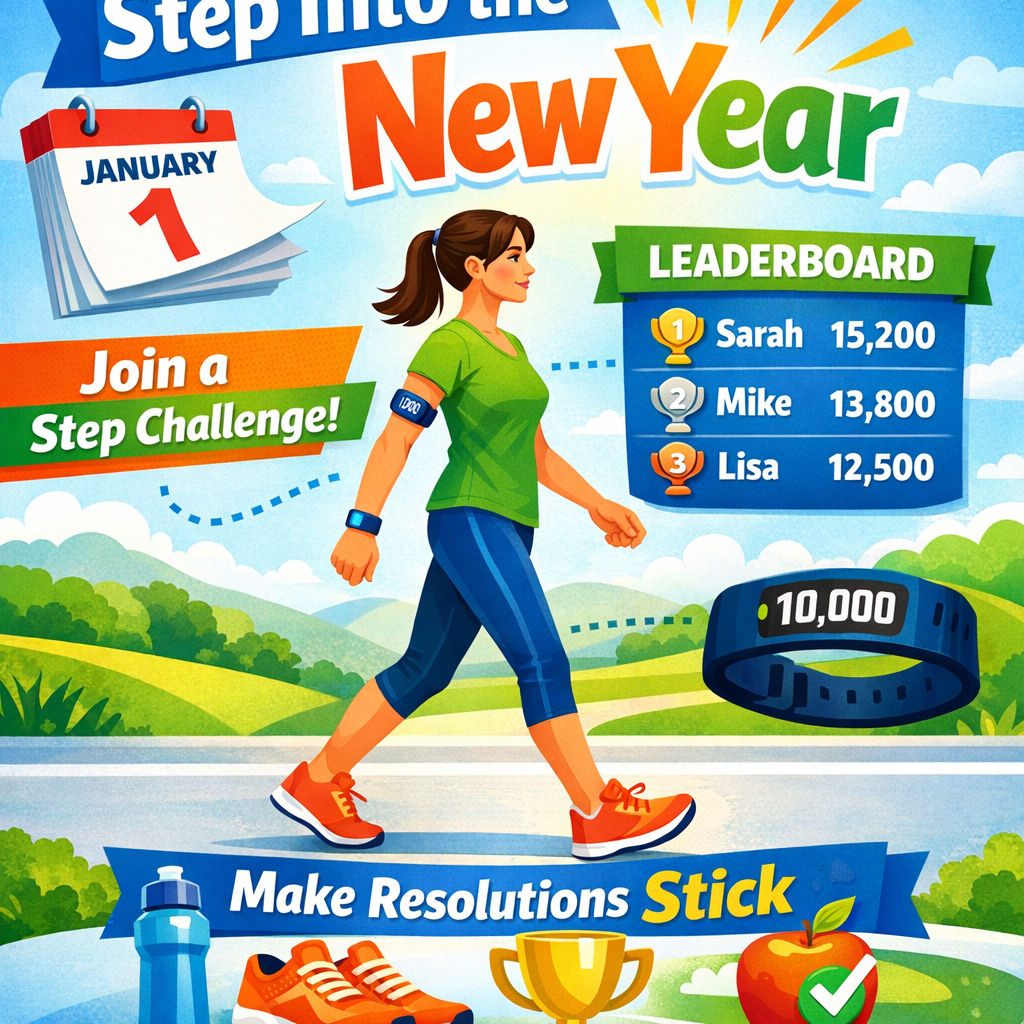
Step Into the New Year: Why Most Resolutions Fail (And How Walking Can Help You Finally Stick With Yours)
January has a funny way of making us believe we're about to become entirely new people.
December 31:
"This is it. New year, new me."
January 2:
"I'm waking up at 5 a.m., meal prepping, reading 30 books, drinking two gallons of water, and somehow becoming the type of person who enjoys kale."
January 19:
"Maybe I'll start Monday..."
Sound familiar?
You're not alone.
Research suggests resolution enthusiasm drops off fast. Some estimates show roughly 80% of people abandon New Year's resolutions by February, and only a small percentage maintain them for the full year.
The problem isn't that people are lazy.
The problem is that most resolutions ask us to become completely different people overnight.
We don't say:
"I'll move a little more."
We say:
"I'm going to completely transform my life starting tomorrow."
That usually lasts about as long as unopened spinach in the fridge.
The people who stick with change often do something different.
They start small.
Sometimes ridiculously small.
And that's where walking becomes surprisingly powerful.
Why Walking Works When Other Resolutions Don't
Walking isn't exciting.
Nobody posts:
"CRUSHED a legendary 17-minute walk today."
No dramatic music.
No tire flips.
No motivational speech playing in the background.
Walking is boring.
And strangely, that's exactly why it works.
Walking doesn't require:
- A gym membership
- Expensive equipment
- Perfect weather
- Advanced fitness knowledge
- Rearranging your entire life
You can walk during lunch.
Walk while taking a call.
Walk after dinner.
Walk with your dog.
Walk with your kids.
Walk because you need five minutes away from your inbox before replying to that email.
Small actions are easier to repeat.
Repeated actions become habits.
Habits create results.
The Science Behind Why Movement Changes More Than Your Step Count
People often think movement only matters if they're trying to lose weight.
But walking affects much more than that.
The Centers for Disease Control and Prevention notes that regular physical activity can reduce anxiety, improve sleep quality, support brain health, and reduce risk factors associated with several chronic conditions.
Research also suggests that even moderate activity like brisk walking contributes to long-term health benefits.
And something interesting happens when people start moving consistently:
They often start changing other behaviors too.
Someone starts taking evening walks.
Then they begin sleeping better.
Then they drink more water.
Then fast food starts becoming less appealing.
Not because they suddenly became a different person.
Because momentum showed up.
Why Step Challenges Feel Different
Let's be honest.
Walking by yourself can become repetitive.
Around day six, your brain starts negotiating:
"You walked yesterday."
"That probably counts for something."
"The couch misses you."
Step challenges solve a problem many resolutions have:
Accountability.
Now your walk isn't just a walk.
It's:
"We're only 2,000 steps behind first place."
"No way Kevin from accounting is beating us."
"I am absolutely taking the long route back from lunch."
Suddenly movement becomes social.
And humans are wired for that.
A Real Example: The Power of Small Goals
Imagine two people.
Person A:
January 1 goal:
"I'm working out six days per week for 90 minutes."
Person B:
January 1 goal:
"I'm walking an extra 3,000 steps every day."
Who survives February?
Usually Person B.
Because consistency beats intensity.
Every time.
Many people fail because they treat motivation like a permanent resource.
It isn't.
Motivation disappears.
Systems stay.
How to Make Your Resolutions Stick This Year
1. Make goals smaller than you think they should be
People routinely overestimate what they can sustain.
Start with:
- 3,000–5,000 extra daily steps
- A 15-minute evening walk
- One walking break during work
Consistency first.
Scale later.
2. Track something visible
Humans like progress.
Even tiny progress.
Watching a streak grow from:
Day 1 → Day 7 → Day 20
feels rewarding.
Visible progress creates momentum.
3. Don't rely on willpower
Willpower is unreliable.
Create triggers instead.
Examples:
- Walk after lunch
- Walk after work
- Walk while taking phone calls
Attach movement to something you already do.
4. Add people
Behavior spreads.
If friends, coworkers, or family join you, consistency becomes easier.
Nobody wants to be the person who says:
"Sorry team, I contributed seven steps today."
Why We Think Goal Days Matter More Than Raw Step Counts
This is something we've learned building StepClash.
Traditional leaderboards often reward the same people repeatedly.
There's always someone walking 25,000 steps daily.
Meanwhile everyone else looks at the leaderboard and thinks:
"Well... I'm definitely not catching Steve."
Consistency matters more.
Someone reaching their goal four or five days every week is building something sustainable.
Habits are rarely built by one huge day.
They're built by showing up repeatedly.
Ready to Make This Year's Resolution Different?
Maybe this isn't the year you completely reinvent yourself.
Maybe this is the year you simply move a little more.
Take a few more walks.
Join a challenge.
Build momentum.
Because years usually don't change lives.
Daily habits do.
And sometimes it starts with something as simple as a few extra steps.
Comments
Join the conversation on this article.
Log in to comment.
LoginNo comments yet.