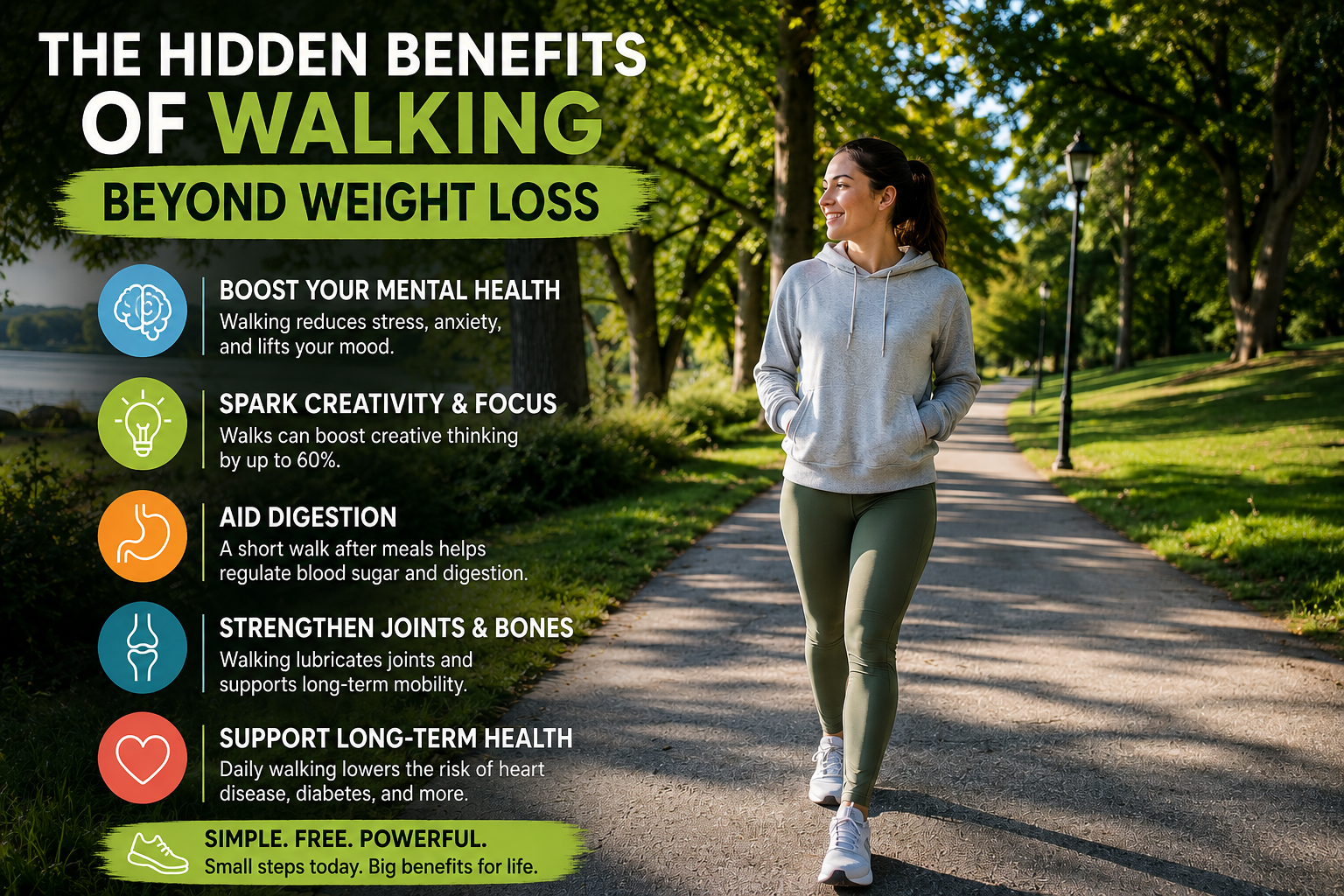
The Hidden Benefits of Walking Beyond Weight Loss
Most people treat walking like the participation trophy of exercise.
It’s not running. It’s not intense interval training. Nobody posts dramatic “beast mode” treadmill selfies after a casual walk around the neighborhood. Walking feels almost too simple to matter.
When people decide to get healthier, they usually jump straight to complicated plans: expensive gym memberships, strict diets, early morning workouts that somehow require waking up before the sun has even considered showing up.
But something interesting happens when people start walking consistently.
They begin because they want to lose weight, then a few weeks later they notice they’re sleeping better. Stress feels lower. Their mood improves. Randomly, they start coming up with better ideas during the day. Suddenly the number on the scale isn’t even the most interesting thing changing.
Walking turns out to be doing much more behind the scenes.
Walking Can Improve Your Mood Faster Than You Think
Ever notice how a bad day feels slightly less terrible after a walk?
That’s not your imagination.
Walking helps trigger the release of endorphins, your body's natural mood boosters. It can also help reduce cortisol, the hormone commonly linked to stress. Even short walks outdoors can have noticeable effects.
Many people describe a walk as hitting the reset button on their brain.
You go outside feeling irritated because your email inbox has declared war on you. Twenty minutes later you come back wondering why you were so worked up in the first place.
Walking won't solve every problem in life, but it can make problems feel smaller and more manageable.
Why Your Best Ideas Seem to Show Up During Walks
Have you ever stared at your computer screen trying to solve a problem for twenty minutes, only to suddenly think of the answer while walking to the kitchen?
Researchers at Stanford University found that walking increased creative thinking by roughly 60% compared to sitting.
There’s a reason some successful leaders prefer walking meetings. Movement seems to wake up parts of the brain that long periods of sitting don't.
Your brain sometimes needs less pressure, not more pressure.
Ironically, stepping away often helps you move forward.
Why a 10-Minute Walk After Eating Can Help
Your grandparents may have been onto something with those after-dinner walks.
Walking after meals can help digestion and reduce blood sugar spikes. Research suggests even a short walk after eating can improve how the body processes glucose.
The best part is you don't need to disappear for an hour.
Ten minutes counts.
Also, unlike lying on the couch immediately after a heavy meal, your body doesn't have to enter negotiations with gravity.
Walking Helps Your Joints More Than Most People Realize
A common myth is that walking wears down your joints.
In reality, moderate walking helps lubricate joints and strengthens muscles around them, which can improve mobility and reduce stiffness.
For many people with mild joint discomfort or arthritis, regular movement often feels better than no movement at all.
Think of it like your car sitting in a garage for six months.
Things usually work better when they move.
Daily Walking Can Help Protect Your Future Health
Walking doesn't always feel impressive because it's simple.
Simple and ineffective are not the same thing.
Research has repeatedly linked regular walking with lower risks of heart disease, stroke, Type 2 diabetes, and other chronic conditions. Studies have also found that people who stay active consistently tend to live longer.
Thirty minutes a day might not feel life changing.
But small daily actions are often where big changes begin.
Walking Gives Your Brain a Break
This might be one of the most underrated benefits of walking.
Modern life asks your brain to make hundreds of decisions every day.
Emails.
Meetings.
Notifications.
What to eat.
What to watch.
What password you used three months ago.
Walking strips everything down.
No alerts.
No constant input.
No decisions.
Even a short walk can create a small pocket of quiet in a very noisy world.
Walking Might Be the Sleep Hack You're Missing
If sleep has been a struggle, walking may help more than you think.
Regular movement can help regulate your circadian rhythm, your body's internal clock. Outdoor walks can also expose you to natural light, which helps signal when your body should feel awake and when it should feel tired.
Many people start walking to improve fitness and accidentally discover they sleep better too.
That feels like a pretty good bonus.
Small Steps Can Create Bigger Changes
The best thing about walking is that it doesn't require perfect conditions.
You don't need expensive equipment.
You don't need to train like an athlete.
You don't need to wait until Monday.
Start with ten minutes.
Walk after lunch.
Walk during phone calls.
Walk with friends.
Walk with your dog.
Walk because you need a break.
Small walks have a strange way of becoming bigger changes over time.
And if a little friendly competition helps keep you motivated, StepClash can help turn those daily steps into something even more fun.
Comments
Join the conversation on this article.
Log in to comment.
LoginNo comments yet.