From Couch to 10K Steps: A Realistic Beginner’s Guide That Actually Works
Let’s be honest.
If you currently average 2,500 steps a day, hearing someone say “just walk 10,000 steps” feels a little like being told to casually climb a mountain before breakfast.
Most people don’t fail at fitness because they’re lazy. They fail because they try to go from “Netflix and snacks” to “new personality unlocked” in about 48 hours.
That usually lasts until Wednesday.
The good news? Walking is one of the few forms of exercise that doesn’t require expensive equipment, a gym membership, or pretending to enjoy burpees.
You just need a plan that doesn’t suck.
First: Forget the 10K Myth for a Minute
Here’s something most fitness influencers conveniently skip:
10,000 steps was never originally created as a magical medical number. It actually started as part of a Japanese marketing campaign for pedometers in the 1960s.
Does that mean walking isn’t amazing for your health? Absolutely not.
Research consistently shows that increasing your daily movement improves cardiovascular health, energy levels, sleep quality, mental health, and even long-term mobility. But the biggest mistake beginners make is treating 10K like an all-or-nothing challenge.
If you currently walk 3,000 steps a day and suddenly force yourself to hit 10K, your body is probably going to file a formal complaint.
Step 1: Figure Out Your Real Starting Point
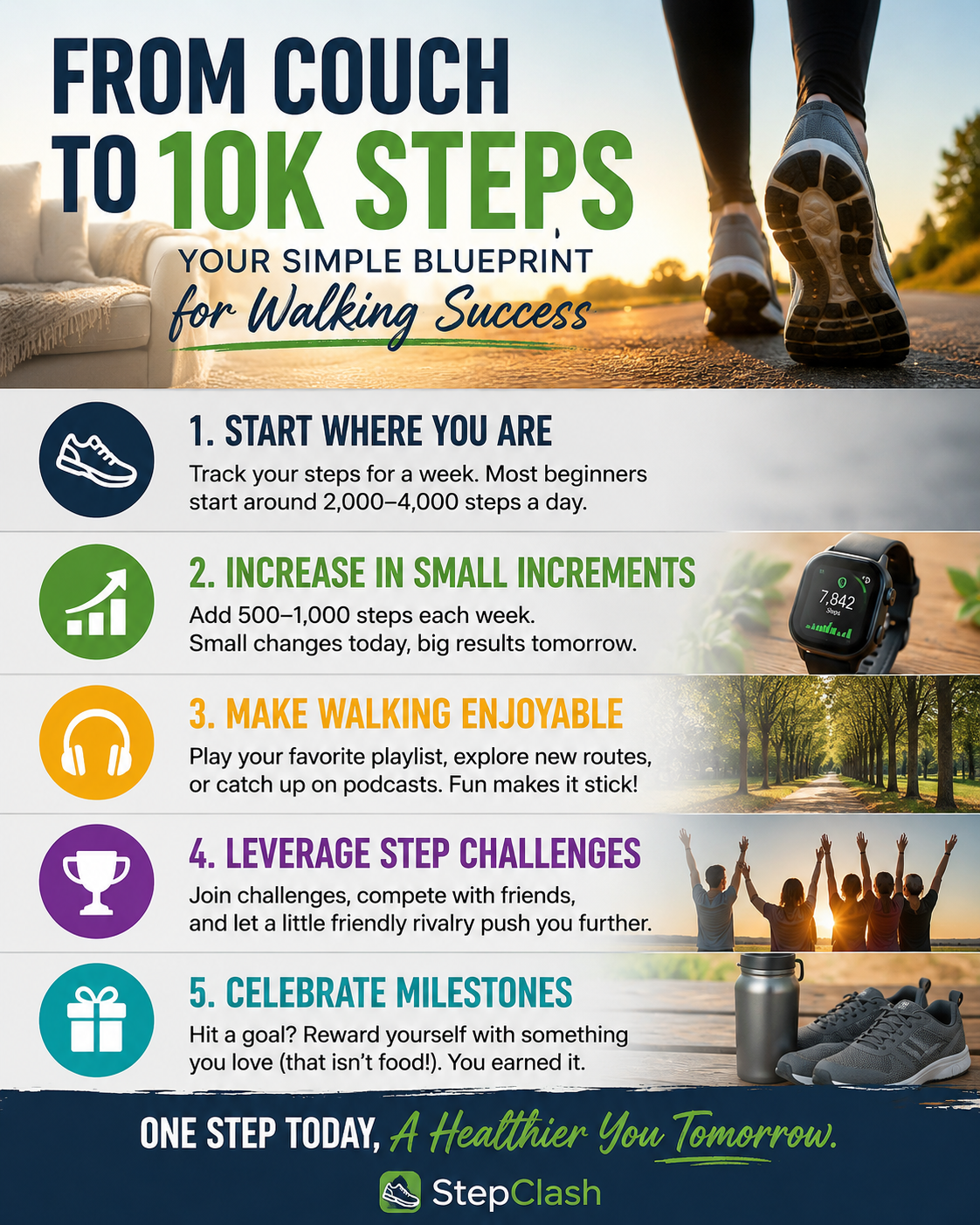
Before changing anything, track your normal activity for about a week.
No pressure.
No judgment.
No “accidentally pacing around the kitchen at 11:30 PM because your watch says 8,742.”
Just learn your baseline.
Most sedentary adults average somewhere between 2,000–4,000 steps daily without trying. Knowing your number gives you something way more useful than motivation: a realistic starting line.
And realistic beats motivational quotes every single time.
Step 2: Stop Trying to Become an Athlete Overnight
This is where people usually sabotage themselves.
They buy new shoes.
Download three fitness apps.
Declare “this is my year.”
Then attempt a 90-minute power walk on Day 1.
Two days later, their calves feel like concrete.
Instead, increase your daily steps gradually:
- Add 500–1,000 extra steps per day each week
- Take a 10-minute walk after meals
- Park farther away
- Pace during phone calls
- Walk while listening to podcasts or music
That may sound small, but consistency compounds fast.
An extra 1,000 steps per day equals roughly:
- 7,000 extra weekly steps
- Over 350,000 additional steps per year
That’s a massive lifestyle shift from tiny changes.
Step 3: Make Walking Less Boring
This part matters more than people think.
Walking fails when it feels like punishment.
You know what nobody says?
“I can’t wait to stare at the same sidewalk for 45 minutes again tomorrow.”
You need entertainment.
Some ideas:
- Save your favorite podcast only for walks
- Call a friend while walking
- Explore different neighborhoods or trails
- Listen to audiobooks
- Use walking as “thinking time” instead of scrolling time
A lot of people accidentally discover their best ideas while walking. Your brain tends to wake up when your body starts moving.
There’s a reason so many people say:
“I went for a walk to clear my head.”
It works.
Step 4: Use Competition to Trick Your Brain
Humans are weird.
We’ll ignore our health for months… but suddenly care deeply because Dave from accounting somehow got 14,000 steps before lunch.
That’s why step challenges work.
They turn walking from “exercise” into a game.
Leaderboards, streaks, milestones, and friendly competition create accountability without making fitness feel miserable. Even light social pressure can dramatically improve consistency.
This is one reason apps like StepClash can be so motivating. You’re no longer walking alone, you’re competing, tracking progress, building streaks, and seeing visible momentum.
And honestly? Watching your name climb a leaderboard is weirdly satisfying.
Step 5: Celebrate the Small Wins
Most people only celebrate the finish line.
That’s a mistake.
Your first consistent week matters.
Your first 5K-step day matters.
Choosing a walk instead of another hour on the couch matters.
Progress isn’t built from giant heroic moments.
It’s built from repeated ordinary days.
That’s the real secret.
Because eventually:
- 3,000 steps stops feeling normal
- 5,000 becomes easy
- 8,000 feels manageable
- And one day you realize 10K isn’t intimidating anymore
It’s just part of your life.
Final Thoughts
You do not need to become a marathon runner.
You do not need perfect discipline.
You do not need a “fitness personality.”
You just need to move a little more than you did yesterday.
Walking works because it’s sustainable. It fits into real life. And unlike extreme fitness plans that burn people out after two weeks, walking is something most people can continue for years.
Start smaller than you think you should.
Stay consistent longer than you think matters.
That’s where the real transformation happens.
Comments
Join the conversation on this article.
Log in to comment.
LoginNo comments yet.