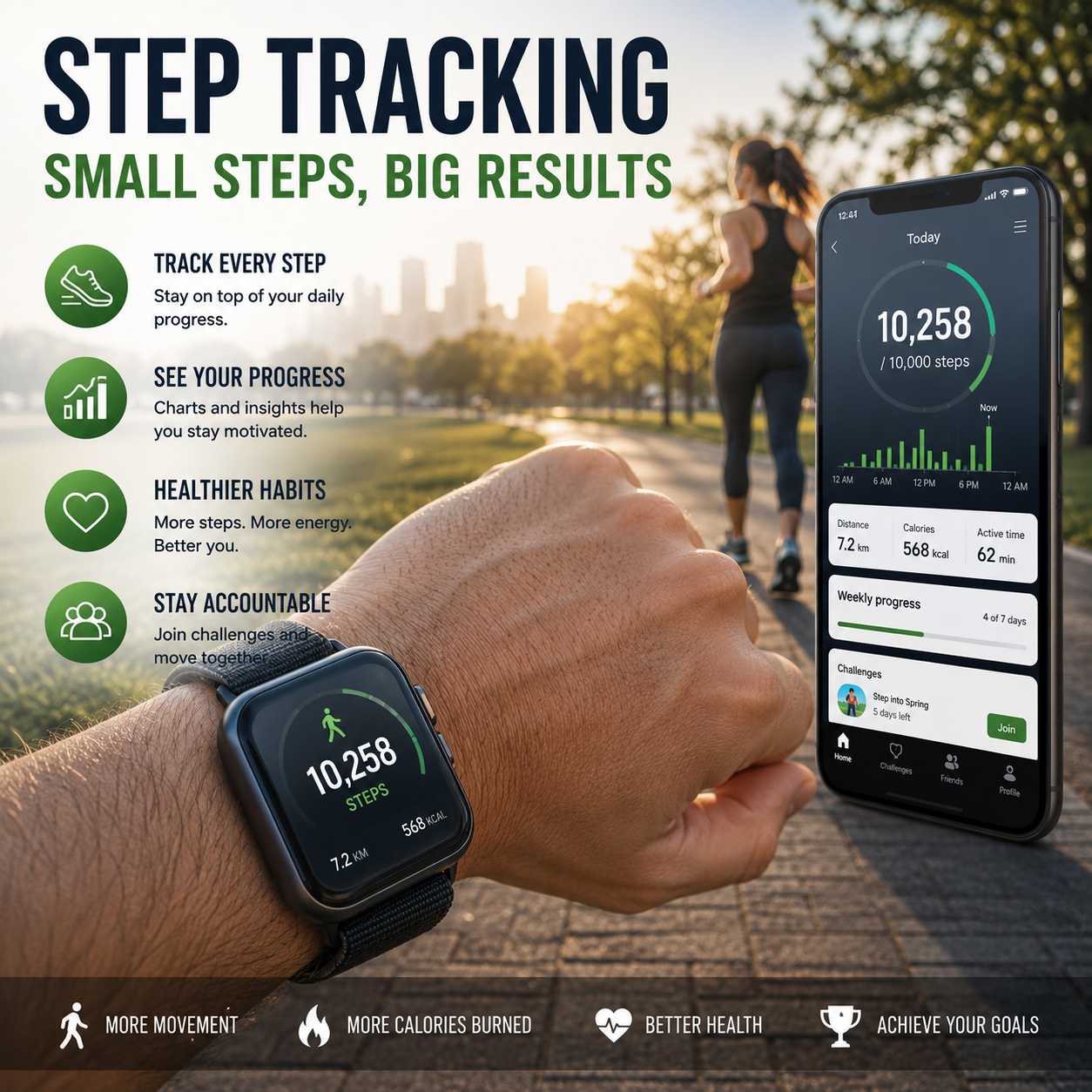
Top 5 Step Tracking Tips
Top 5 Step Tracking Tips That Actually Help You Stay Consistent
Let’s be honest.
Step tracking starts out innocent enough.
You buy a smartwatch, set a goal, and think:
“Yeah, 10,000 steps a day sounds reasonable.”
Then suddenly it’s 11:14 PM and you’re marching around your kitchen like a confused mall walker because your watch says 9,482.
We’ve all been there.
The good news is step tracking really can improve your health, energy, and consistency. The bad news is most people make it way harder than it needs to be.
The secret is not perfection.
It’s making movement fit naturally into your life.
Here are five step tracking tips that actually work in the real world.
1. Stop Setting Unrealistic Step Goals
This is probably the biggest mistake beginners make.
People go from averaging 2,500 daily steps straight to trying to hit 10,000 overnight because some fitness influencer made it sound easy.
Your legs disagree.
Instead of aiming for a huge number immediately, start with something realistic:
- 5,000 steps
- 6,000 steps
- maybe 7,000 if you’re already somewhat active
The best goal is not the most impressive one.
It’s the one you can consistently hit without hating your life.
And honestly, consistency beats intensity almost every time.
A smaller goal you hit daily builds confidence.
A massive goal you constantly miss builds frustration.
2. Use a Tracker You’ll Actually Wear
Fitness trackers are great.
Fitness trackers sitting in a drawer are less effective.
You do not need the world’s most expensive smartwatch to improve your habits. Your phone, a budget fitness tracker, or a smartwatch can all work well.
The important part is consistency.
And yes, accuracy matters a little too.
A lot of people forget to:
- update their height
- adjust stride settings
- wear the watch consistently
- charge the thing before it dies at 4 PM
Nothing humbles a person faster than realizing their “super active day” was not counted because their watch battery gave up before supper.
3. Break Your Walks Into Smaller Pieces
One huge walk is great.
But smaller walks throughout the day are often way easier to stick with long term.
This is one of the most underrated step tracking tricks.
Try:
- a quick morning walk
- pacing during phone calls
- walking after meals
- a short evening walk
- parking farther away
- taking the stairs more often
Those little chunks add up fast.
And psychologically, shorter walks feel easier to start.
Your brain resists:
“Go walk for an hour.”
But it usually accepts:
“Just walk for 10 minutes.”
That’s how momentum starts.
4. Use Movement Reminders Before You Become Furniture
Modern life makes sitting way too easy.
You sit while working.
You sit while driving.
You sit while watching TV.
Then somehow your watch passive-aggressively informs you that you’ve taken 1,137 steps all day.
Rude.
Movement reminders help break that cycle.
Even standing up once an hour and walking around for a few minutes can:
- improve circulation
- reduce stiffness
- boost energy
- add hundreds of extra steps daily
A quick lap around the office or house may not feel like much, but over weeks and months it makes a huge difference.
Plus your back will probably send you a thank-you note.
5. Join a Step Challenge
This is where things get interesting.
Walking alone is fine.
Walking while trying to beat your friend on a leaderboard?
Completely different experience.
Step challenges work because they tap into psychology:
- accountability
- competition
- streaks
- progress tracking
- social motivation
Suddenly people start doing things they would never normally do.
Extra evening walks.
Parking farther away.
Walking laps while brushing their teeth.
Checking the leaderboard like it’s the stock market.
And honestly?
It works.
Communities like StepClash make step tracking feel less like exercise and more like a game. That small mental shift is often what helps people stay consistent long enough to build real habits.
Celebrate the Small Wins
This part matters more than people realize.
Do not wait until you lose 30 pounds or hit a massive milestone before giving yourself credit.
Celebrate:
- your first full week tracking
- a new daily streak
- your highest step day
- choosing a walk instead of staying on the couch
Those moments matter.
Because long-term health changes are usually built from small decisions repeated consistently.
Not dramatic overnight transformations.
Final Thoughts
Step tracking works best when it supports your life instead of controlling it.
You do not need perfect routines.
You do not need elite fitness levels.
And you definitely do not need to panic-walk through your living room at midnight every night.
You just need awareness, consistency, and a few habits you can realistically maintain.
The steps add up faster than you think.
And over time, those small daily walks can genuinely change your energy, health, mindset, and routine in ways that feel surprisingly big.
Comments
Join the conversation on this article.
Log in to comment.
LoginNo comments yet.